At a glance
I built CreatorGraph as a brand-side creator discovery prototype. It analyzes a brand's niche, uses Google dork-style search to find creators across the web, resolves public evidence into creator identities, then ranks creators by niche compatibility.
Built
A discovery pipeline that turns messy public web data into structured creator profiles and explainable brand-fit recommendations.
Technical core
Google dork-style indexing, platform scraping, staged ingestion, identity resolution, niche extraction, and compatibility scoring.
Lesson
Creator discovery is only useful when the recommendation explains why a creator fits the brand.
Origin
The idea started at a Stan event, but the product became broader
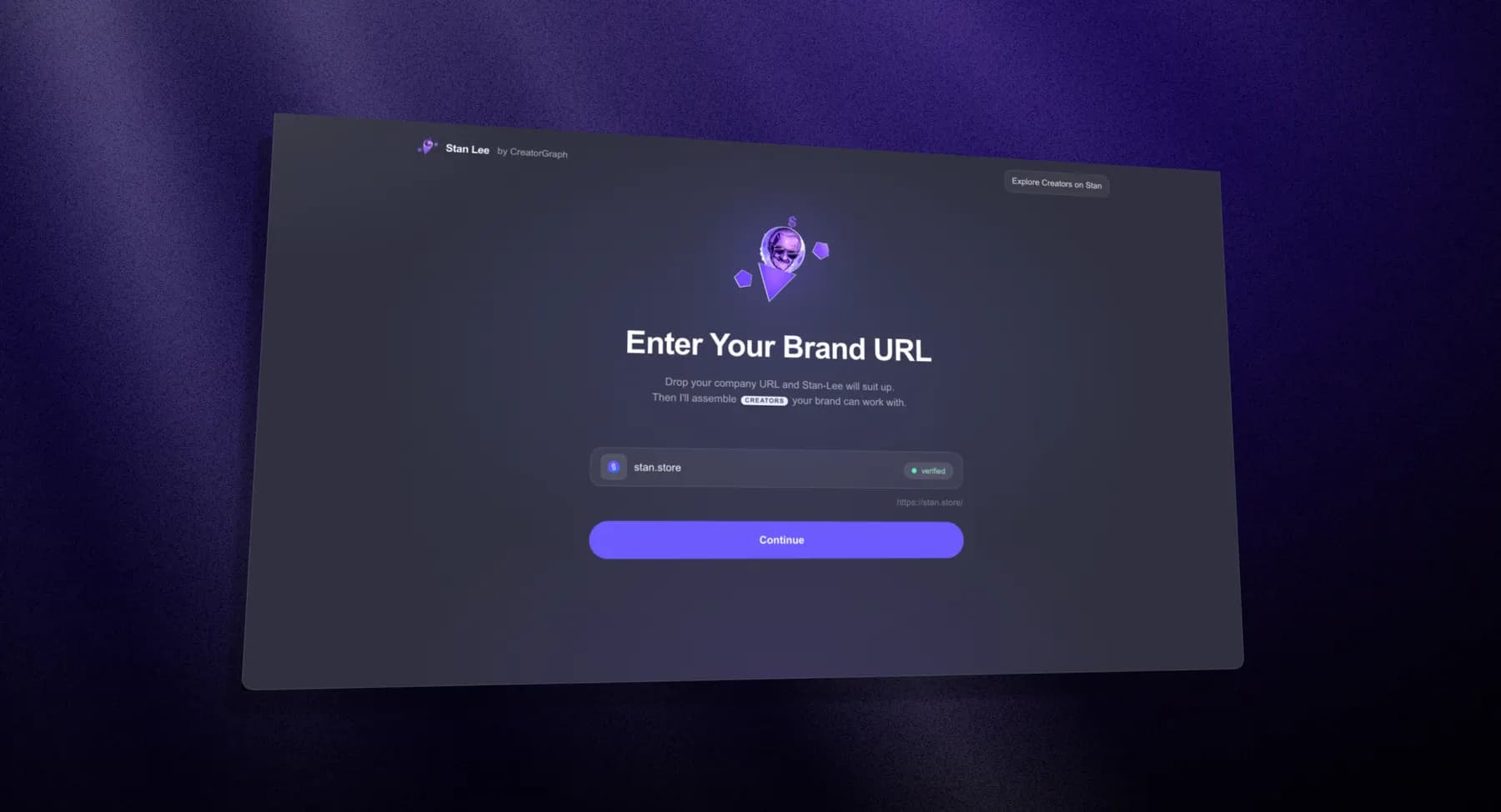
CreatorGraph came out of a Stan co-working build-in-public event. That shaped the first version: I started by looking for Stan creators and used that ecosystem as the entry point.
The actual product idea was broader than Stan.store. I wanted to know if a brand could enter its website, have the system understand its niche, and get a shortlist of creators whose public content looked compatible with that brand.
Problem
The hard part is finding creators who actually fit
Brands can search X, TikTok, Instagram, LinkedIn, Google, and storefronts manually. That quickly turns into guesswork. A profile can look active while the creator's content has nothing to do with the brand's niche.
CreatorGraph focused on the step after search: understanding whether a creator is actually relevant to a specific brand. That meant collecting public signals, extracting niche context, and making the match reason clear enough for a human to inspect.
Workflow
Brand niche to creator match
The product flow starts with a brand URL. CreatorGraph analyzes the brand, searches the web for possible creators, scrapes their public profiles and content, links that evidence into creator identities, then compares those creators against the brand.
Brand analysis
Turns a brand website into category, audience, product, campaign, and niche signals.
Web indexing
Uses Google dork-style queries to find creator pages across X, TikTok, Instagram, LinkedIn, Google, and Stan.store.
Creator enrichment
Collects profile copy, links, storefront details, content themes, and other public clues.
Identity resolution
Links social profiles, storefronts, personal domains, and cross-link evidence into canonical creator identities before ranking.
Compatibility ranking
Scores creators against the brand's niche so the shortlist is based on fit, not just discovery.
Discovery
Google became the creator index
There was no single creator directory I could rely on, so I used Google as the discovery layer. Search operators uncovered indexed creator pages, social profiles, storefronts, and cross-linked accounts.
Stan.store was useful because of the event origin, but it was not the whole system. CreatorGraph also looked at X, TikTok, Instagram, LinkedIn, Google results, and other public web traces.
Each result was evidence, not truth. A result could point to a creator, a storefront, a social profile, or a noisy match, so the pipeline kept source context before ranking anything.
Matching
The matcher compared creator content against the brand's niche
After discovery, CreatorGraph checked each creator's public content and profile context for niche signals. A skincare brand should not just get popular creators. It should get creators whose content actually makes sense for skincare.
The matcher compared brand category, creator topics, profile language, storefront positioning, platform presence, and content themes. The output was a compatibility score with reasons, so the recommendation could be checked.
Niche fit
Compares brand category and campaign intent against creator content themes and profile positioning.
Platform fit
Checks whether the creator's public presence matches where the brand would likely run a campaign.
Evidence trail
Keeps the source pages and extracted signals visible enough to debug bad matches.
Explainable ranking
Ranks creators with reasons instead of returning a mysterious black-box list.
Lessons
Scraping was only useful if the match was explainable
Scraping more pages did not automatically make the product better. The value came from turning messy public signals into a recommendation that felt grounded and inspectable.
If I extended CreatorGraph, I would make the review loop stronger: let users approve or reject matches, correct creator niches, merge duplicate profiles, and feed those decisions back into ranking. That would turn the prototype from a one-shot search tool into a learning creator research workspace.