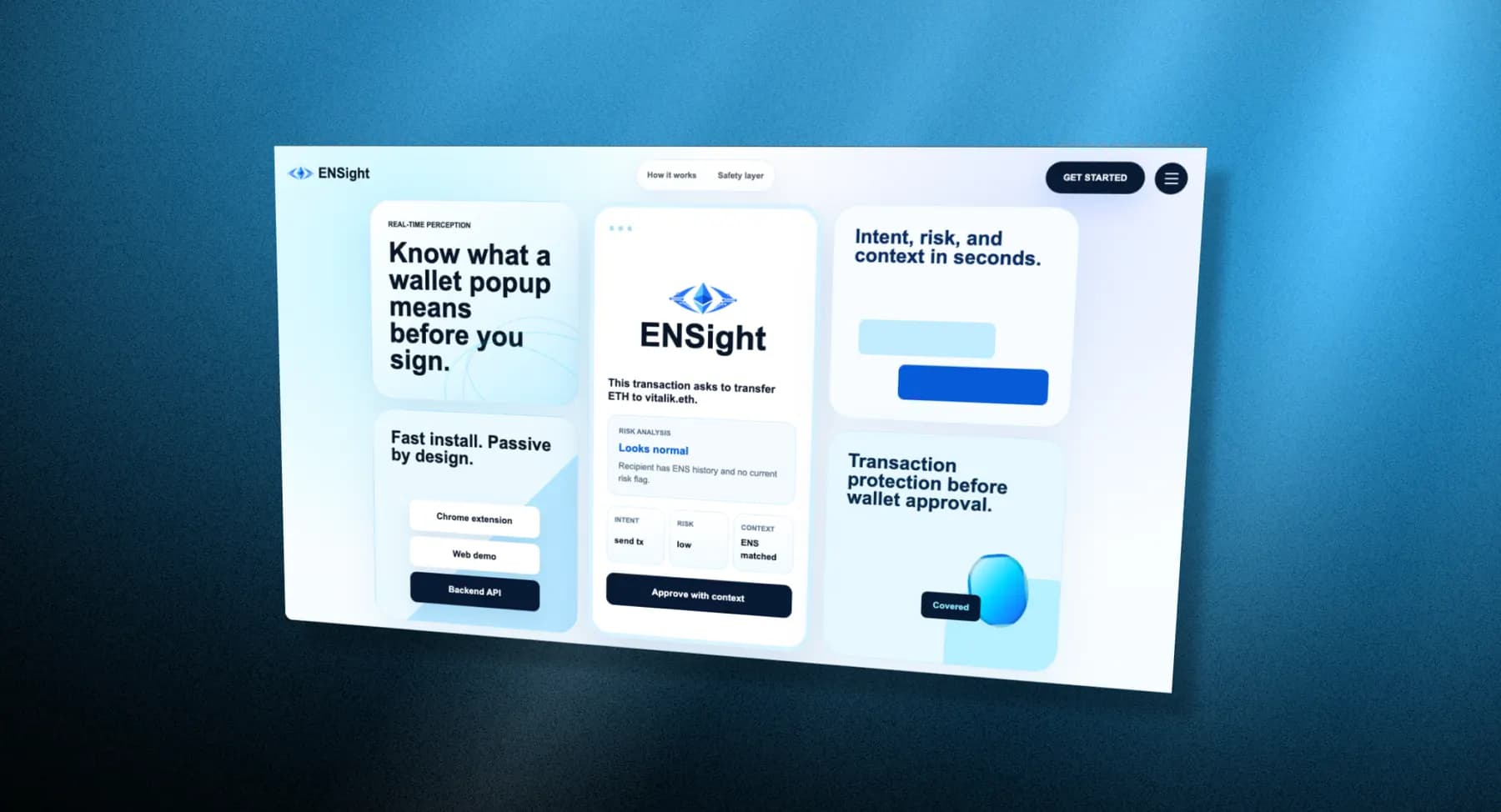
At a glance
ENSight is a Chrome extension that observes wallet activity and explains high-risk Ethereum interactions before a user signs. I focused on the extension runtime: page-context injection, wallet request observation, per-tab state, and UI-ready safety context.
Built
A Chrome extension runtime that detects wallet usage, observes high-signal Ethereum requests, and keeps per-tab safety state.
Boundary
The extension observes wallet calls without touching private keys, mutating requests, or replacing the user's wallet.
Lesson
Browser extensions are split across page scripts, content scripts, service workers, storage, and UI. That shape matters.
Problem
Wallet prompts hide too much context
Ethereum users approve transactions, signatures, wallet connections, and chain changes through small wallet popups. Those prompts often show raw addresses or generic signing text, but not much about what the site is actually trying to do.
ENSight explored a simple idea: sit beside the wallet as a read-only safety layer. Watch for meaningful wallet activity, explain it in plain language, and surface risk context before the user signs.
Extension
The extension had to observe the dApp from inside the page
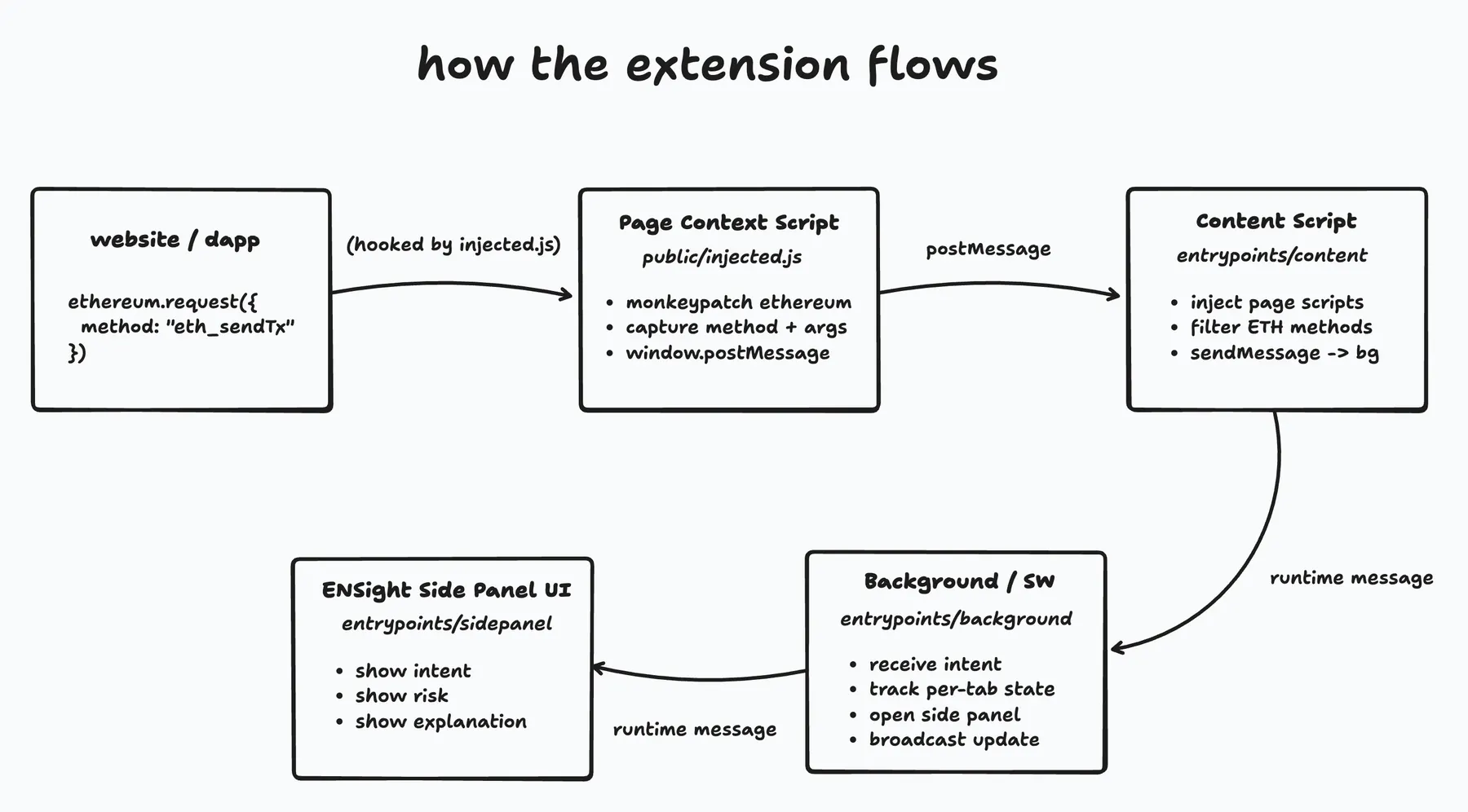
The hard part was browser isolation. Wallets inject window.ethereum into the page's JavaScript world. A normal content script can use extension APIs, but it cannot reliably see that same object. ENSight solves this with an injected page-context script that wraps ethereum.request, emits sanitized lifecycle events, and then lets the original request continue normally.
The extension filtered for high-signal methods: wallet connects, transactions, signatures, typed-data signing, and chain changes. It did not need to bother the user just because a page had a wallet provider.
Architecture
Extension first, backend second
The extension was the core product surface. It owned detection, request lifecycle tracking, per-tab sessions, local storage snapshots, and popup or side-panel state. The backend and web repos added product shape around it: ENS resolution, risk lookups, interaction graph endpoints, onboarding, and demos.
Page-context injection
Observed wallet activity where the dApp and provider actually run.
Manifest V3 state
Used background and storage snapshots so UI state survived service worker restarts.
Safety context
Collapsed before, after, and error events into request records the UI could explain.
Enrichment
Backend services could add ENS data, risk lookup, and wallet interaction context.
Takeaways
The signal has to be reliable before the explanation matters
The most useful learning was not Web3-specific. It was learning how many moving parts a Chrome extension really has. A page script, content script, background service worker, popup, side panel, tab lifecycle, and local storage can all disagree if the state model is loose.
The second learning was about safety products: stay quiet until the moment matters. Detecting a wallet provider is not enough. The useful moment is when a site asks the wallet to do something.
If I kept building ENSight, I would finish the side panel, decode common transaction and signature types, and add focused risk heuristics before expanding into broader reputation features.