At a glance
I built Xpo in public after a challenge from Stan's CTO: help creators get from 0 to 1000 followers on X. The project became a web app and browser extension for account analysis, voice-aware drafting, and reply opportunities.
Built
A full-stack AI product with onboarding, X account analysis, drafting workflows, billing, and extension APIs.
Extension
A companion extension that could inspect visible X posts, rank reply opportunities, and draft context-aware replies.
Takeaway
The reply-networking wedge was stronger than the broader creator platform I built around it.
Origin
A public challenge became a sprint
Xpo started at a Stan co-working event. I had just posted CreatorGraph, and the Stan team noticed it. A few conversations later, Vitalii, Stan's CTO, challenged me publicly: solve the 0 to 1000 followers problem on X.
I treated it as both a product prompt and a hiring-in-public campaign. I built the app, posted updates, and made a walkthrough video. The process did not turn into a role, but the project got attention and made the work easy for people to remember.
Product
The strongest idea was reply-led growth
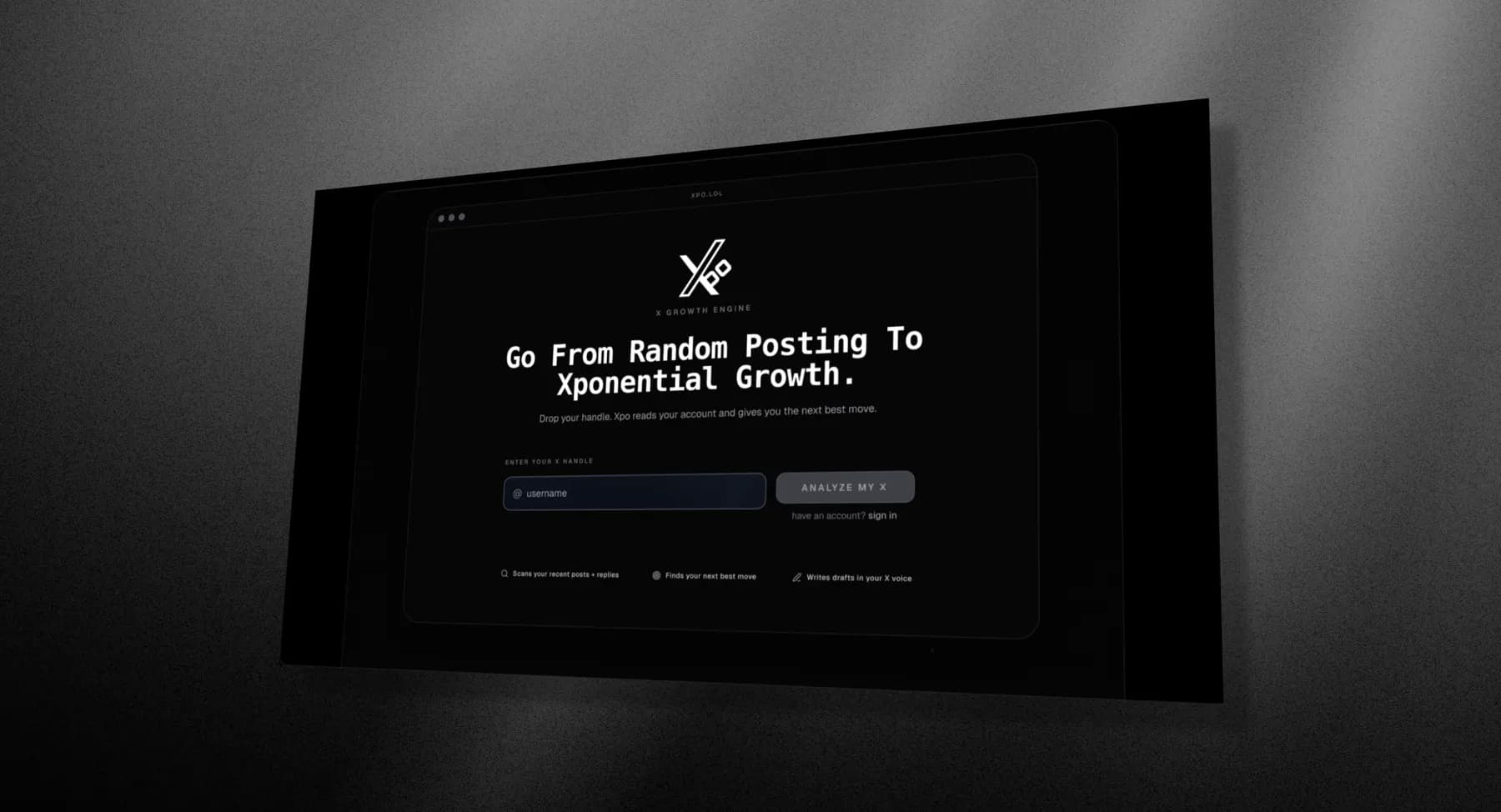
Xpo analyzed a creator's X account, built a voice profile, drafted posts, and helped them find better conversations to join. The web app handled onboarding, chat, post analysis, source material, billing, and account strategy. The extension brought the workflow into X itself.
Account analysis
Scraped or imported X profile data, then summarized positioning, topics, hooks, and growth stage.
Voice-aware drafting
Generated posts and revisions from a creator's style profile, source material, and previous content.
Reply opportunities
Read visible X posts, ranked which ones were worth replying to, and generated replies with context.
Billing and accounts
Shipped real product plumbing: auth, Stripe, persistence, onboarding state, and extension tokens.
Build
I shipped both a product and a browser surface
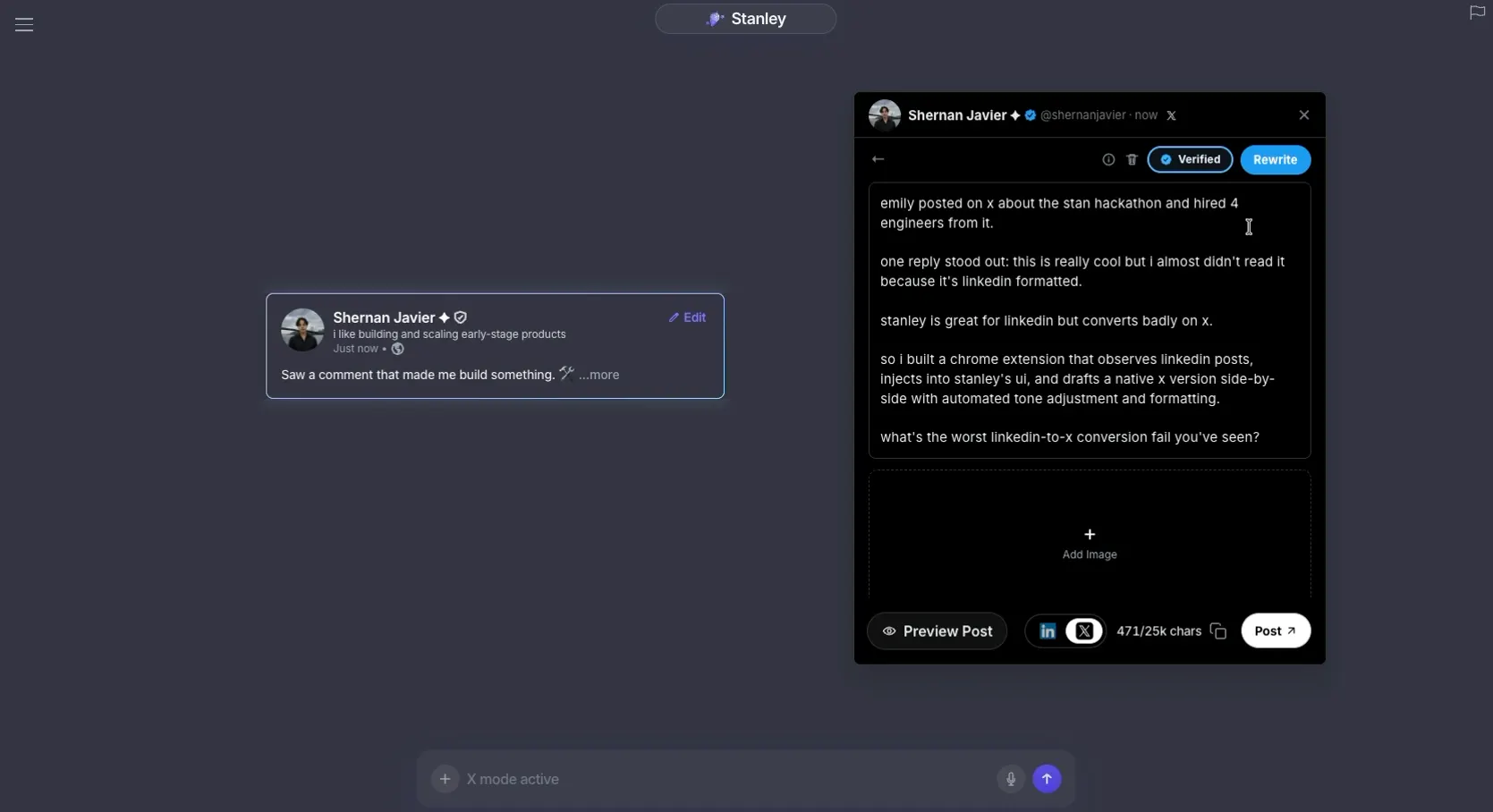
The first prototype translated LinkedIn-style writing into X-native drafts. That made the problem visible, but it was still too focused on formatting. The better version was the extension: find a real post, understand the conversation, decide whether a reply is worth making, and draft something that sounds like the creator.
Lesson
I should have built the narrow wedge first
The project showed range: product design, extension work, auth, billing, scraping, AI workflows, and a public launch story. The mistake was scope. The challenge was not "build an AI creator platform." It was "help someone get from 0 to 1000 followers on X."
The sharper MVP would have been just the reply loop: find high-signal posts, explain why they are worth replying to, generate a few good replies in the creator's voice, and learn from what they choose.
That is the version I would build first now. Broad systems are fun, but a narrow workflow is easier to validate.